Why the Banshee Still Resonates (Part II) — Keening, Grief, and the Sacred Warning
In Part I, we treated the banshee as folklore deserves to be treated: not as a jump-scare, but as a role. A figure at the threshold. A messenger whose most enduring symbol is not a face, but a sound.
That sound is keening—a lament that turns grief into something audible, shared, and survivable.
Part II is where we step out of the classroom and into the living room. Not to modernize the banshee into a trend, but to ask why she still follows us—why the idea of a warning cry outside the window still feels unnervingly plausible.
A quick respect note
This post draws from Irish folklore and historical funeral customs with care. It’s not a guide to performing keening, and it isn’t meant to flatten a living culture into an aesthetic. It’s an exploration of meaning: what stories preserve, what they protect, and why certain figures refuse to go quiet.
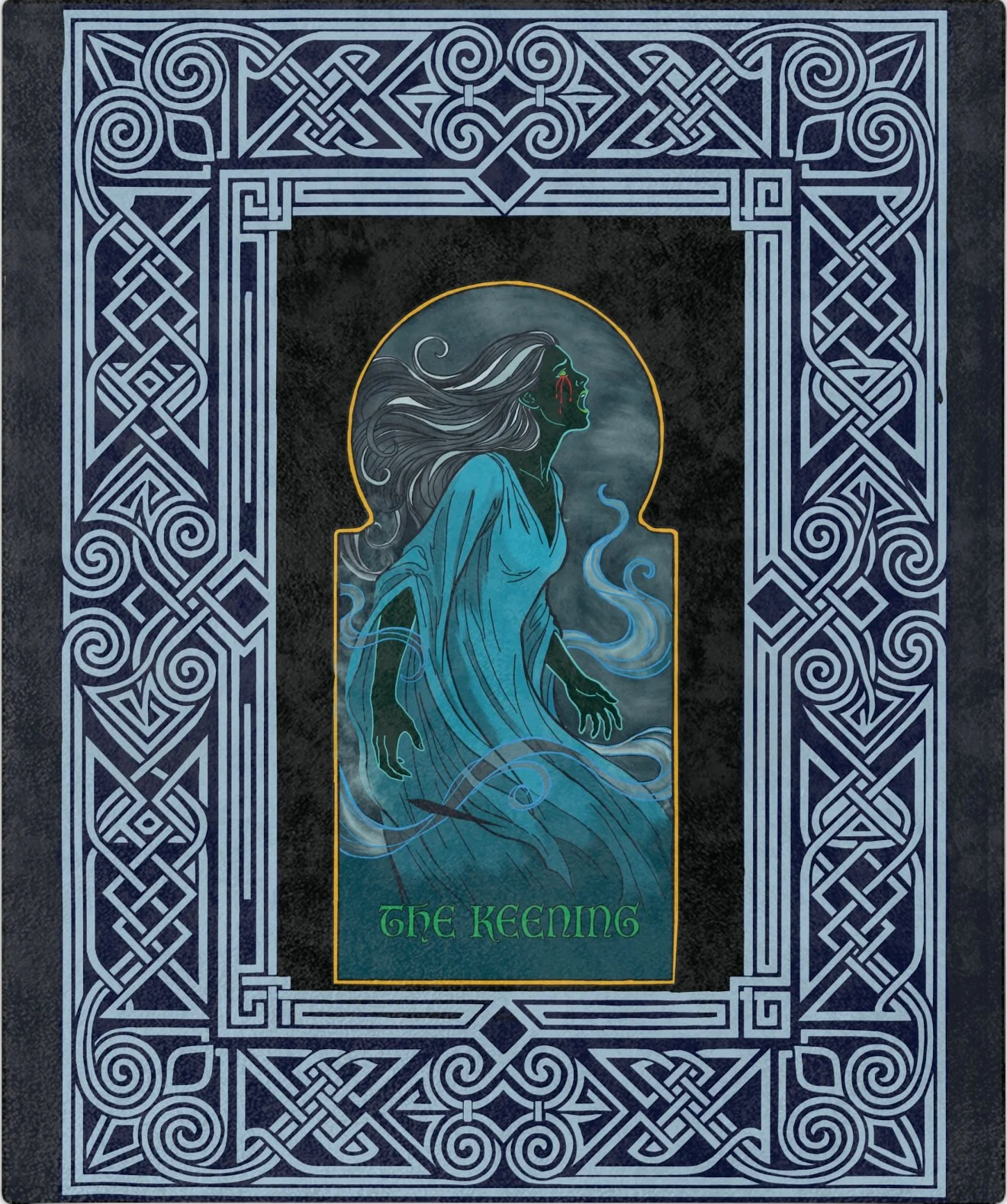
The Keening Celtic gothic blanket design with ornate blue knotwork border and a banshee figure in a moonlit archway.
The banshee isn’t a villain. She’s a witness.
In a lot of modern horror, the supernatural is framed as an intruder: something that breaks into your life.
The banshee is different.
She arrives because something is already breaking.
In many tellings, she doesn’t cause death—she announces it. She is grief’s herald. The household may not be ready to speak the truth, but the story insists the truth will still be heard.
That’s part of why she resonates now: we live in a world that often asks grief to be tidy.
Be private.
Be productive.
Be “over it” quickly.
The banshee refuses that. She is the mythic reminder that loss is not polite.
Keening as a metaphor: when the body needs sound
Keening, historically, is a structured lament—part song, part wail, part ritual. It’s grief with a shape.
Even if you’ve never heard keening, you may recognize the impulse:
The moment your throat tightens and you can’t make language.
The sound you make when words are too small.
The need to externalize what’s happening inside your ribs.
In that sense, the banshee’s cry isn’t just a spooky detail. It’s a symbol for something deeply human:
the body insisting on expression.
The banshee doesn’t whisper. She doesn’t “process quietly.” She keens.
The sacred warning: why omens comfort us
It sounds strange to say an omen can be comforting, but folklore often uses warnings as a kind of mercy.
A warning means:
You are not blindsided.
You are not alone.
The world is not random.
Even if the outcome can’t be changed, the story offers a ritual moment before the door closes.
The banshee is that moment.
She is the candle lit in the hallway. The hush before the knock. The feeling that the air has shifted.
In modern life, we don’t always get that. News arrives by phone. Grief arrives mid-workday. There is no threshold—just impact.
So we keep stories that give us a threshold.
The banshee and the feminine voice: grief that will not be silenced
It’s not incidental that the banshee is most often a woman.
Across many traditions, women are positioned as caretakers of the emotional and ritual life of the household—especially around birth and death. The banshee myth preserves that association, but it also does something sharper:
It gives the feminine voice authority.
Not decorative authority. Not “muse” authority.
Ritual authority.
Her cry matters. It changes the atmosphere. It forces attention.
If you’ve ever been told you’re “too much” when you’re grieving—too loud, too intense, too honest—the banshee reads like a corrective.
She is the story saying: this is what loss sounds like. Let it be heard.
How this myth becomes a textile
A blanket is an intimate object. It’s what you reach for when you’re cold, when you’re sick, when you’re trying to make a hard day softer.
That’s why the banshee belongs there.
Not as a horror mascot, but as a symbol:
of warning
of witness
of grief that is allowed to have a voice
When keening appears in the design language, it isn’t just a word. It’s a thesis stitched into the border: a reminder that mourning is not weakness, and that sound can be a form of care.
If you want to keep reading
If you haven’t read Part I yet, start there for the origins and symbols:
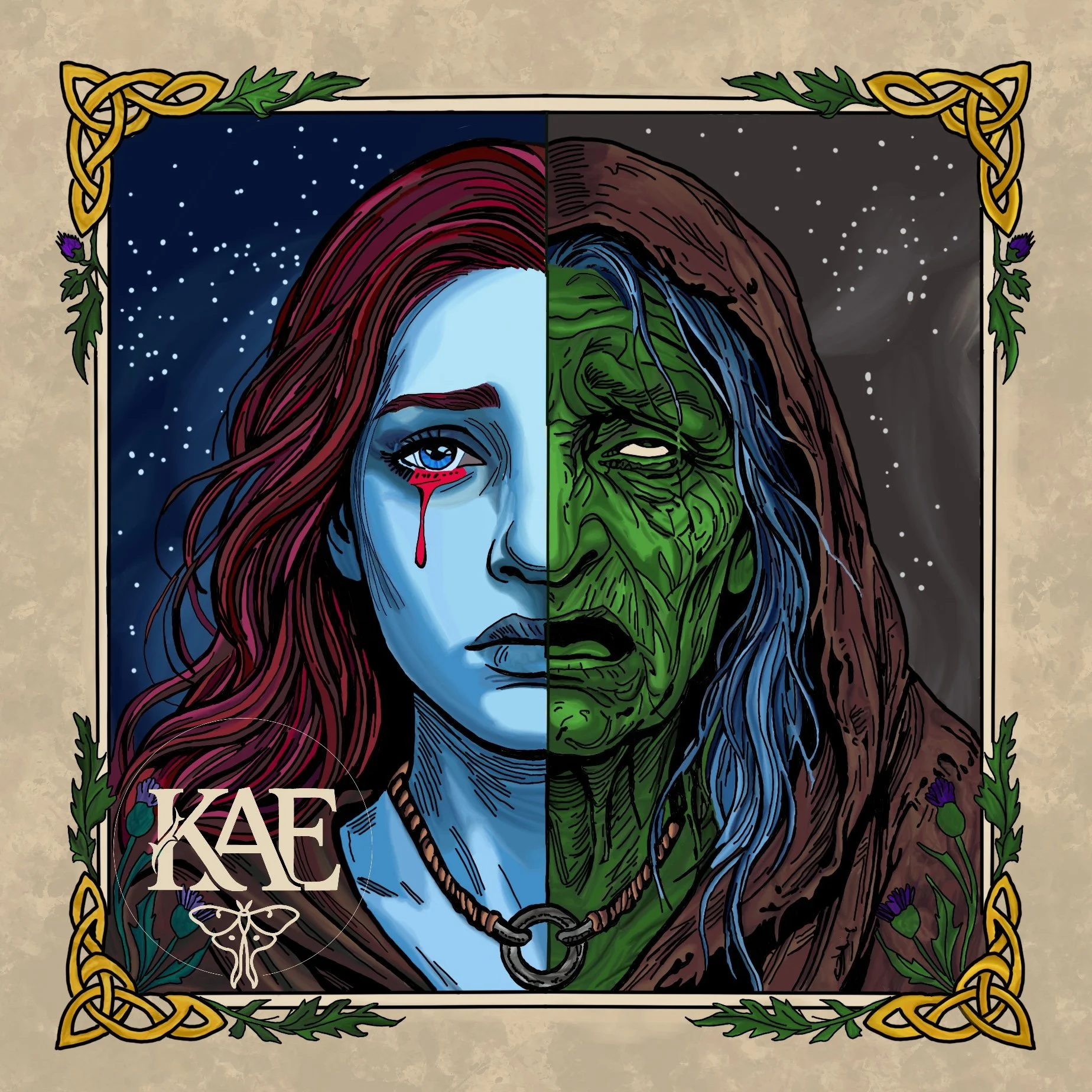
The banshee isn’t simply a monster—she’s a signal at the edge of the household. In this Mythology Classroom entry, we trace her origins, her symbols, and the sound most associated with her: keening, a ritual lament where grief becomes communal and audible.
If you want to keep the myth close—one piece for the body, one for the study—these are the artifacts.
Made to order via my production partner. Designed in-studio by KAEsStudioCreations.